AI Assistants & Agents
An AI agent is a system that answers questions or completes tasks using your own documents and software, rather than general knowledge from the internet. DevMations builds these so they give accurate answers on real customer questions, not just on the handful someone tried in a demo.
Also called RAG · retrieval-augmented generation · agentic AI · AI copilots · LLM applications
Why teams call us about this
You have seen a demo where the AI answered five questions beautifully, so you built one. Then real customers arrived. It confidently gave a wrong answer. It missed something that was clearly in your documents. It got stuck repeating itself. And the bill was four times what anyone estimated. Nobody on the team can tell you why, because nothing was ever measured.
What you get out of it
- Customers get correct answers from your own information, not invented ones
- You can see, in a weekly report, whether it is getting better or worse
- Running costs are predictable instead of a surprise at the end of the month
What you actually receive
Working software and documentation — not a report recommending that somebody else build it.
An assistant that knows your business
It searches your documents, policies, product data or support history and answers from those — so it says what your company would say, not what the internet says.
The ability to actually do things
Not just answering, but looking up an order, checking availability, or starting a process in your existing systems — with safeguards so it cannot do anything destructive.
Sensible behaviour when it does not know
It says so, or hands over to a person, instead of inventing something plausible. This is the single biggest cause of AI embarrassing a company in public.
A cost you can plan around
We measure what each conversation costs and how long it takes, then bring both down. You get a number you can budget against.
Proof it works
A test suite that runs automatically and tells you the quality score every time anything changes.
The engagement
- 01
We read your material
Your actual documents and your actual customer questions, before we propose anything. Most disappointing AI is a problem with how the information was prepared, not with the AI.
- 02
We measure where you are now
A score for the current state. Without it, nobody can tell later whether the work was worth paying for.
- 03
We build it
With the testing in place from the first week, so quality is visible the whole way through rather than assessed at the end.
- 04
We tune it and hand it over
Accuracy up, cost and waiting time down, then handed over with documentation your team can work from.
Under the hood
The specifics, for whoever on your side will be reviewing this. If that is not you, nothing below changes what you get — skip to the work.
- Retrieval pipeline
- Chunking strategy, embedding model choice and index design fitted to the corpus. Hybrid retrieval with re-ranking where it measurably beats plain vector similarity on a golden set.
- Tool and function layer
- Tool schemas scoped to intent rather than to your database shape, with argument validation, idempotency on write paths, and graceful degradation when a downstream service is unavailable.
- Orchestration
- Step limits, retry policy, timeout budgets and explicit human handoff, so a stuck agent terminates rather than looping through your token budget.
- Cost and latency
- Per-request cost and p95 latency tracked as first-class metrics. Prompt caching, model routing to smaller models for easy requests, and context trimming applied where measurement shows they pay.
- Guardrails
- Input and output filtering, prompt-injection resistance on retrieved content treated as an explicit eval category, and refusal behaviour tuned to your risk posture.
What we use
- OpenAI
- Anthropic Claude
- LangChain
- LlamaIndex
- Pinecone
- pgvector
- Redis
- Python
- TypeScript
Where we have done this
Live deployments you can open.
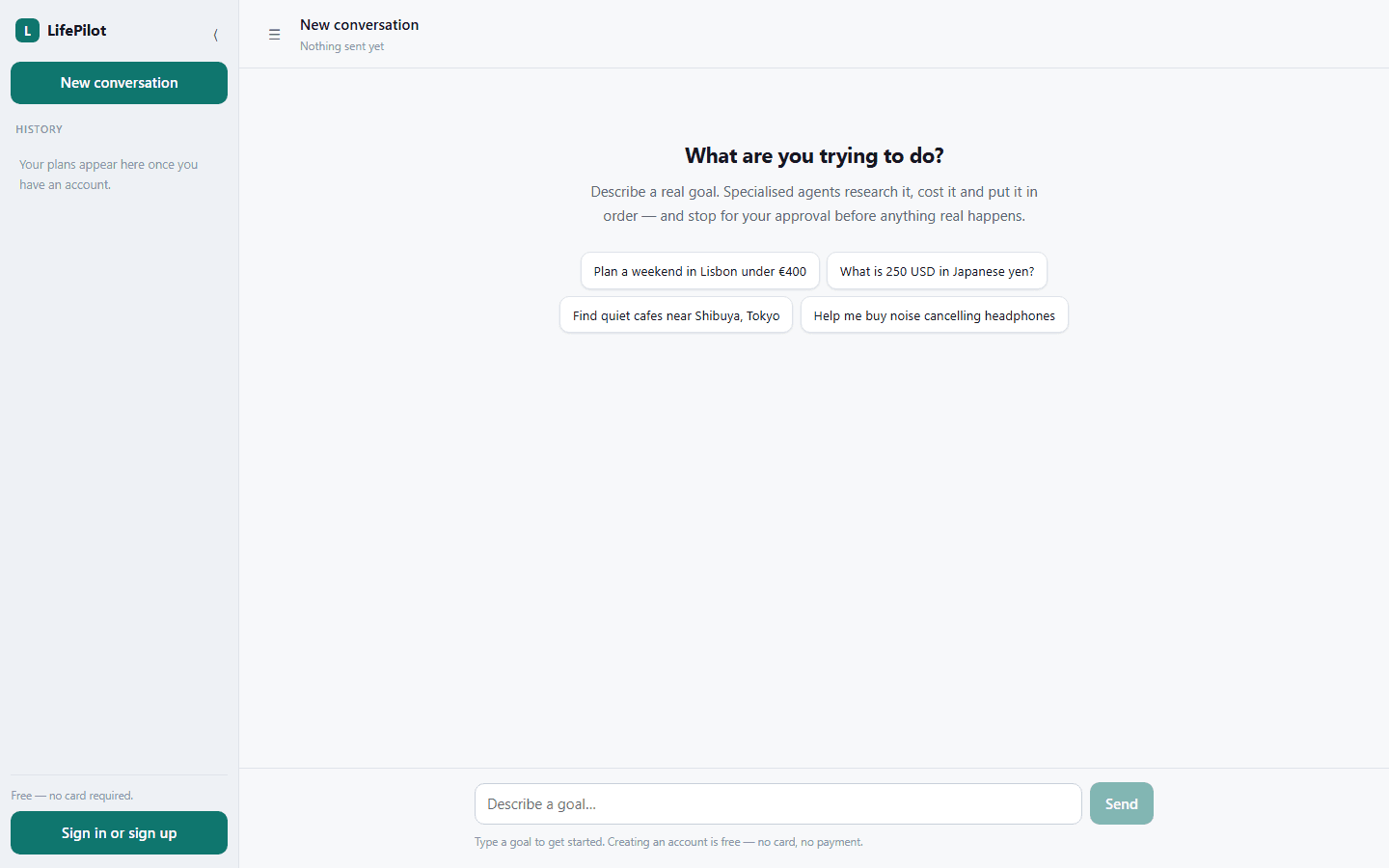
LifePilot
A multi-agent planning assistant. You describe a goal in plain language and specialised agents research it, cost it and put it in order — then it stops for your approval before anything is actually booked or paid for.
Open live site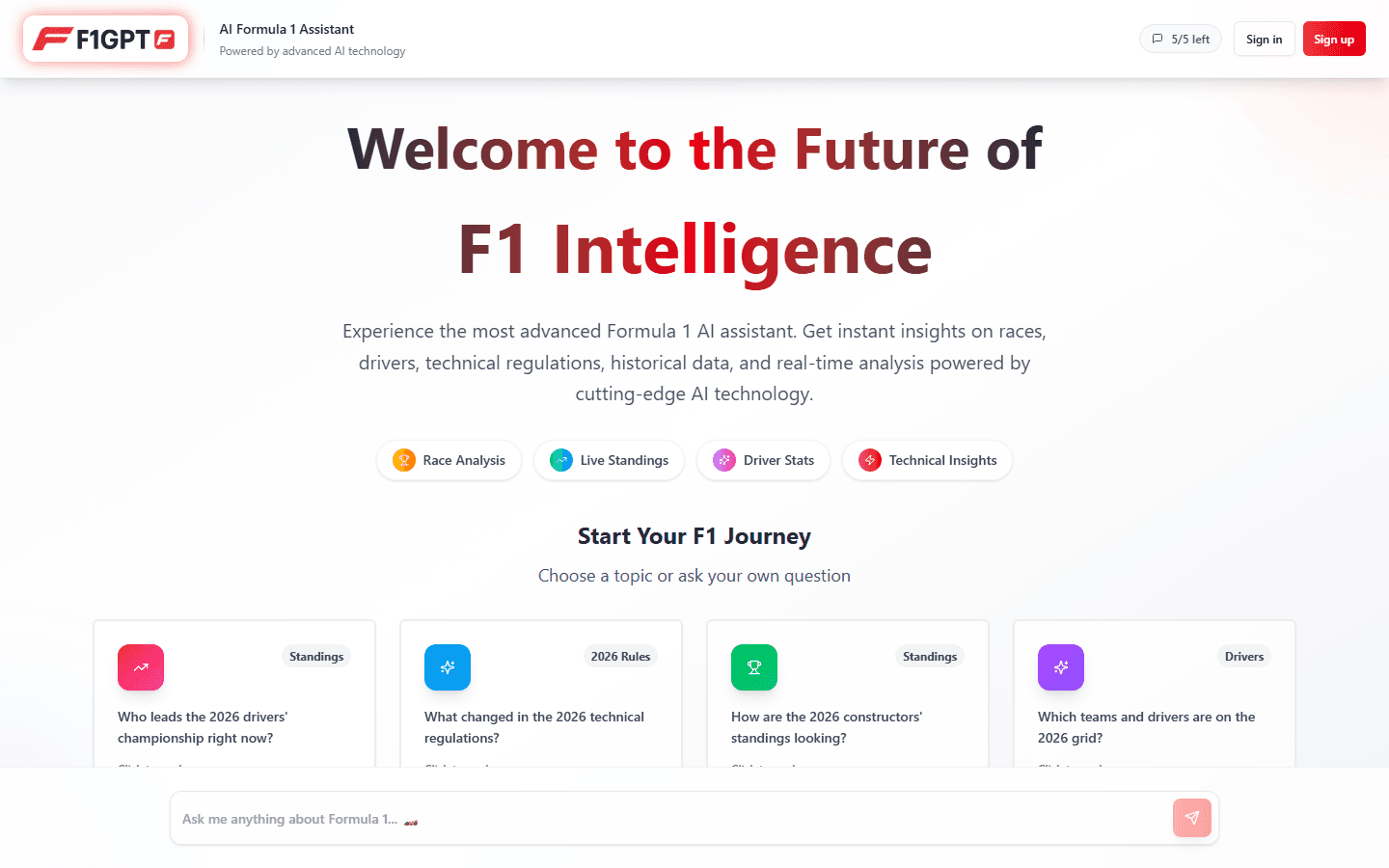
F1GPT
A Formula 1 assistant that answers from current race data — standings, regulations, driver and circuit history — rather than from a model’s training cut-off. Retrieval over a domain that changes every race weekend, with accounts and per-user rate limiting.
Open live site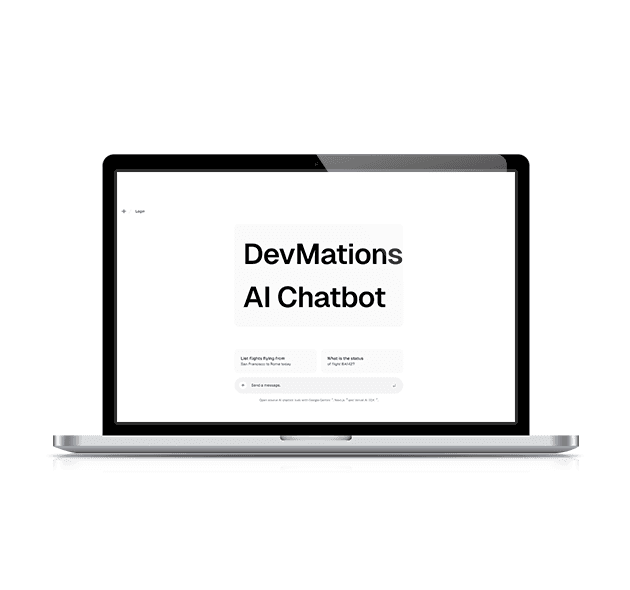
DevMations AI
A retrieval-backed assistant that answers questions from a business knowledge base in real time, built as our own reference implementation of a production RAG stack.
Open live siteAI Assistants & Agents — questions
- How do you know it is giving the right answers?
- We build a set of real questions where we already know the correct answer, and run the whole set automatically every time anything changes. You get a score. When the score drops, the change does not go live.
- Can you reduce what we are already spending on this?
- Usually. The common savings are storing repeated information instead of re-sending it, using a cheaper model for the easy questions, and trimming instructions that have quietly grown over time. We measure the bill before and after, so the saving is a fact rather than a claim.
- Which AI provider should we use?
- Whichever one meets your quality bar most cheaply on your specific task — which is rarely the one topping public leaderboards. We build the testing that answers this for you, so the decision can be revisited as new models come out.
- Will it make things up?
- All AI can. The engineering job is to make it rare and to make it visible: give it the right source material, teach it to say when it does not know, and test for invented answers as a specific scored category rather than hoping.
Thinking about AI Assistants & Agents?
Describe what you have and what is going wrong with it. We will tell you what we would do first, and whether it is worth doing.
Book a call